常见二叉树解题集合

二叉树思维篇:填充节点的右侧指针、二叉树展开为链表、树的子结构

116.填充节点的右侧指针
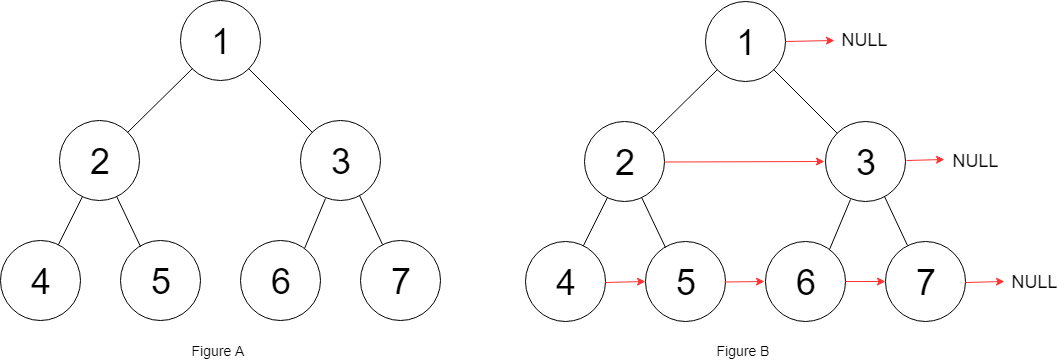
116_sample

1
2
3
4
5
6
7
8
9
10
11
12
13
14
15
16
17
18
19
20
21
22
23
24
25
26
27
28
29
30
31
32
33
34
35
36
/*
// Definition for a Node.
class Node {
public:
int val;
Node* left;
Node* right;
Node* next;
Node() : val(0), left(NULL), right(NULL), next(NULL) {}
Node(int _val) : val(_val), left(NULL), right(NULL), next(NULL) {}
Node(int _val, Node* _left, Node* _right, Node* _next)
: val(_val), left(_left), right(_right), next(_next) {}
};
*/
class Solution {
public:
Node* connect(Node* root) {
if(root==NULL) return NULL;
traverse(root->left, root->right);
return root;
}
void traverse(Node* node1, Node* node2){
if(node1==NULL || node2==NULL){
return ;
}
//前序遍历位置
//将传入的两个节点连起来
node1->next=node2;

//连接相同父节点的两个字节点
traverse(node1->left, node1->right);
traverse(node2->left, node2->right);
//连接跨越父节点的两个子节点
traverse(node1->right, node2->left);
}
};
1
2
3
4
5
6
7
8
9
10
11
12
13
14
15
16
17
18
19
20
21
22
23
24
25
26
27
28
29
30
31
/*
// Definition for a Node.
type Node struct {
Val int
Left *Node
Right *Node
Next *Node
}
*/
func connect(root *Node) *Node {
if root == nil {
return nil
}
traverse(root.Left, root.Right)
return root
}

func traverse(node1, node2 *Node) {
if node1 == nil || node2 == nil {
return
}
//前序遍历位置
//将传入的两个节点连起来
node1.Next = node2

//连接相同父节点的两个字节点
traverse(node1.Left, node1.Right)
traverse(node2.Left, node2.Right)
//连接跨越父节点的两个子节点
traverse(node1.Right, node2.Left)
}

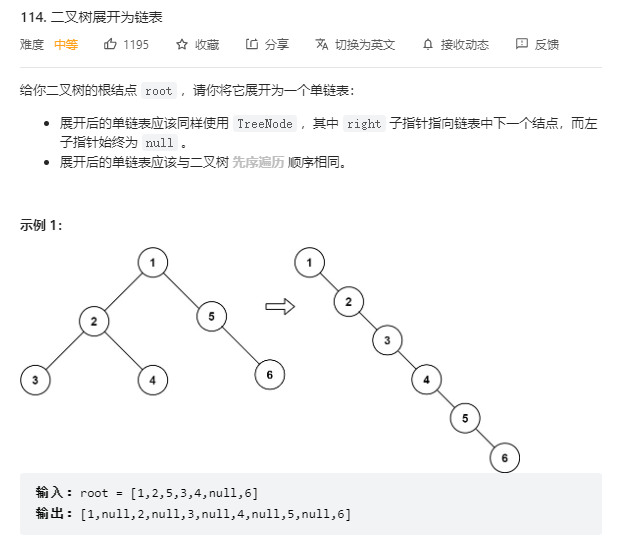
114.二叉树展开为链表

114

1
2
3
4
5
6
7
8
9
10
11
12
13
14
15
16
17
18
19
20
21
22
23
24
25
26
27
28
29
class Solution {
public:
void flatten(TreeNode* root) {
//递归实现,先将root的左右子树开展成单链表,再将右子树接到左子树
//然后将整个左子树作为原树的右子树

//base case
if(root == nullptr) return ;

//将左右子树拉平
flatten(root->left);
flatten(root->right);

/***后序遍历位置***/
//用两个临时节点来存左右子树
TreeNode* left = root->left;
TreeNode* right = root->right;

//将左子树接过去
root->left = nullptr;
root->right = left;

TreeNode* p = root;
while(p->right){
p = p->right;
}
p->right = right;
}
};
1
2
3
4
5
6
7
8
9
10
11
12
13
14
15
16
17
18
19
20
21
22
23
24
25
26
27
28
29
30
31
32
33
34
35
36
/**
* Definition for a binary tree node.
* type TreeNode struct {
* Val int
* Left *TreeNode
* Right *TreeNode
* }
*/
func flatten(root *TreeNode) {
//递归实现,先将root的左右子树开展成单链表,再将右子树接到左子树
//然后将整个左子树作为原树的右子树

//base case
if root == nil {
return
}

//将左右子树拉平
flatten(root.Left)
flatten(root.Right)

/***后序遍历位置***/
//用两个临时节点来存左右子树
left := root.Left
right := root.Right

//将左子树接过去
root.Left = nil
root.Right = left

p := root
for p.Right != nil {
p = p.Right
}
p.Right = right
}

offer I 二叉搜索树与双向链表

输入一棵二叉搜索树,将该二叉搜索树转换成一个排序的循环双向链表。要求不能创建任何新的节点,只能调整树中节点指针的指向。

思路:

定义两个指针pre和head,pre指针用于保存中序遍历的前一个节点,head指针用于记录排序链表的头节点。

中序遍历二叉树,遍历顺序就是双线链表的建立顺序。只需要在中序遍历的过程中,修改每个节点的左右指针,将零散的节点连接成双向循环链表。

1
2
3
4
5
6
7
8
9
10
11
12
13
14
15
16
17
18
19
20
21
22
23
24
25
26
27
28
29
30
31
32
33
34
35
36
37
38
39
40
41
42
43
44
45
46
47
48
/* // Definition for a Node.
class Node {
public:
int val;
Node* left;
Node* right;
Node() {}
Node(int _val) {
val = _val;
left = NULL;
right = NULL;
}
Node(int _val, Node* _left, Node* _right) {
val = _val;
left = _left;
right = _right;
}
};*/
class Solution {
public:
Node* pre=NULL; //用于保存中序遍历的前一个节点
Node* head=NULL; //用于记录排序链表的头节点
Node* treeToDoublyList(Node* root) {
if(root==NULL) return root;
dfs(root);

//连接首尾
head->left = pre;
pre->right = head;

return head;
}
void dfs(Node* root){
//base case
if(root==NULL) return;
//左子树
dfs(root->left);

/*中序遍历位置*/
if(pre!=NULL) pre->right = root; //将前驱节点的右指针指向当前根节点
else head = root; //保存链表头节点
root->left = pre; //root的left指针指向其前驱
pre = root; //前驱节点右移

//右子树
dfs(root->right);
}
};
1
2
3
4
5
6
7
8
9
10
11
12
13
14
15
16
17
18
19
20
21
22
23
24
25
26
27
28
29
30
31
32
33
34
35
36
37
38
39
40
41
42
43
44
45
46
/* // Definition for a Node.
type Node struct {
Val int
Left *Node
Right *Node
}
*/
type Solution struct {
pre *Node //用于保存中序遍历的前一个节点
head *Node //用于记录排序链表的头节点
}

func treeToDoublyList(root *Node) *Node {
if root == nil {
return root
}
s := &Solution{}
s.dfs(root)

//连接首尾
s.head.Left = s.pre
s.pre.Right = s.head

return s.head
}

func (s *Solution) dfs(root *Node) {
//base case
if root == nil {
return
}
//左子树
s.dfs(root.Left)

/*中序遍历位置*/
if s.pre != nil {
s.pre.Right = root //将前驱节点的右指针指向当前根节点
} else {
s.head = root //保存链表头节点
}
root.Left = s.pre //root的left指针指向其前驱
s.pre = root //前驱节点右移

//右子树
s.dfs(root.Right)
}

offer 26.树的子结构

1
2
3
4
5
6
7
8
9
10
11
12
13
14
15
16
17
18
19
20
21
22
23
24
25
/**
* Definition for a binary tree node.
* struct TreeNode {
* int val;
* TreeNode *left;
* TreeNode *right;
* TreeNode(int x) : val(x), left(NULL), right(NULL) {}
* };
*/
class Solution {
public:
bool isSubStructure(TreeNode* A, TreeNode* B) {
//先序遍历树 A 中的每个节点 n_A ; (对应函数 isSubStructure(A, B) )
//判断树 A 中 以 n_A 为根节点的子树是否包含树 B ; (对应函数 helper(A, B) )

if(A==NULL || B==NULL) return false;
return helper(A, B) || isSubStructure(A->left, B) || isSubStructure(A->right, B);
}
bool helper(TreeNode* A, TreeNode* B){
if(B==NULL) return true;
if(A==NULL) return false;
if(A->val!=B->val) return false;
return helper(A->left, B->left) && helper(A->right, B->right);
}
};
1
2
3
4
5
6
7
8
9
10
11
12
13
14
15
16
17
18
19
20
21
22
23
24
25
26
27
28
29
30
/**
* Definition for a binary tree node.
* type TreeNode struct {
* Val int
* Left *TreeNode
* Right *TreeNode
* }
*/
func isSubStructure(A *TreeNode, B *TreeNode) bool {
//先序遍历树 A 中的每个节点 n_A ; (对应函数 isSubStructure(A, B) )
//判断树 A 中 以 n_A 为根节点的子树是否包含树 B ; (对应函数 helper(A, B) )

if A == nil || B == nil {
return false
}
return helper(A, B) || isSubStructure(A.Left, B) || isSubStructure(A.Right, B)
}

func helper(A *TreeNode, B *TreeNode) bool {
if B == nil {
return true
}
if A == nil {
return false
}
if A.Val != B.Val {
return false
}
return helper(A.Left, B.Left) && helper(A.Right, B.Right)
}

572.另一棵树的子树

1
2
3
4
5
6
7
8
9
10
11
12
13
14
15
16
17
18
19
20
21
22
23
24
25
26
27
/**
* Definition for a binary tree node.
* struct TreeNode {
* int val;
* TreeNode *left;
* TreeNode *right;
* TreeNode() : val(0), left(nullptr), right(nullptr) {}
* TreeNode(int x) : val(x), left(nullptr), right(nullptr) {}
* TreeNode(int x, TreeNode *left, TreeNode *right) : val(x), left(left), right(right) {}
* };
*/
class Solution {
public:
bool isSubtree(TreeNode* root, TreeNode* subRoot) {
if(root==nullptr) return false;

return isSame(root, subRoot) || isSubtree(root->left, subRoot)
|| isSubtree(root->right, subRoot);
}
bool isSame(TreeNode* a, TreeNode* b){
if(a==nullptr && b==nullptr) return true;
if(a==nullptr || b==nullptr) return false;
if(a->val!=b->val) return false;

return isSame(a->left, b->left) && isSame(a->right, b->right);
}
};
1
2
3
4
5
6
7
8
9
10
11
12
13
14
15
16
17
18
19
20
21
22
23
24
25
26
27
28
29
/**
* Definition for a binary tree node.
* type TreeNode struct {
* Val int
* Left *TreeNode
* Right *TreeNode
* }
*/
func isSubtree(root *TreeNode, subRoot *TreeNode) bool {
if root == nil {
return false
}

return isSame(root, subRoot) || isSubtree(root.Left, subRoot) || isSubtree(root.Right, subRoot)
}

func isSame(a *TreeNode, b *TreeNode) bool {
if a == nil && b == nil {
return true
}
if a == nil || b == nil {
return false
}
if a.Val != b.Val {
return false
}

return isSame(a.Left, b.Left) && isSame(a.Right, b.Right)
}

236.二叉树的最近公共祖先

1
2
3
4
5
6
7
8
9
10
11
12
13
14
15
16
17
18
19
20
21
22
23
24
25
26
27
28
/**
* Definition for a binary tree node.
* struct TreeNode {
* int val;
* TreeNode *left;
* TreeNode *right;
* TreeNode(int x) : val(x), left(NULL), right(NULL) {}
* };
*/
class Solution {
public:
TreeNode* lowestCommonAncestor(TreeNode* root, TreeNode* p, TreeNode* q) {
//后序遍历

//base case
if(root==NULL) return NULL;
if(root==p || root==q) return root;

TreeNode* left=lowestCommonAncestor(root->left, p, q);
TreeNode* right=lowestCommonAncestor(root->right, p, q);

if(left!=NULL && right!=NULL) return root;

if(left==NULL && right==NULL) return NULL;

return left==NULL ? right : left;
}
};
1
2
3
4
5
6
7
8
9
10
11
12
13
14
15
16
17
18
19
20
21
22
23
24
25
26
27
28
29
30
31
32
33
34
35
/**
* Definition for a binary tree node.
* type TreeNode struct {
* Val int
* Left *TreeNode
* Right *TreeNode
* }
*/
func lowestCommonAncestor(root, p, q *TreeNode) *TreeNode {
//后序遍历

//base case
if root == nil {
return nil
}
if root == p || root == q {
return root
}

left := lowestCommonAncestor(root.Left, p, q)
right := lowestCommonAncestor(root.Right, p, q)

if left != nil && right != nil {
return root
}

if left == nil && right == nil {
return nil
}

if left == nil {
return right
}
return left
}
1
2
3
4
5
6
7
8
9
10
11
12
13
14
15
16
17
18
19
class Solution {
public:
int lowestCommonAncestor(TreeNode* root, int o1, int o2) {
// 后序遍历

//base case
if(root==nullptr) return 0;
if(root->val==o1 || root->val==o2) return root->val;

int val1 = lowestCommonAncestor(root->left, o1, o2);
int val2 = lowestCommonAncestor(root->right, o1, o2);

if(val1!=0 && val2!=0) return root->val;

if(val1==0 && val2==0) return 0;

return val1==0 ? val2 : val1;
}
};
1
2
3
4
5
6
7
8
9
10
11
12
13
14
15
16
17
18
19
20
21
22
23
24
25
26
27
28
29
30
31
32
33
34
35
/**
* Definition for a binary tree node.
* type TreeNode struct {
* Val int
* Left *TreeNode
* Right *TreeNode
* }
*/
func lowestCommonAncestor(root *TreeNode, o1 int, o2 int) int {
// 后序遍历

//base case
if root == nil {
return 0
}
if root.Val == o1 || root.Val == o2 {
return root.Val
}

val1 := lowestCommonAncestor(root.Left, o1, o2)
val2 := lowestCommonAncestor(root.Right, o1, o2)

if val1 != 0 && val2 != 0 {
return root.Val
}

if val1 == 0 && val2 == 0 {
return 0
}

if val1 == 0 {
return val2
}
return val1
}

判断是不是完全二叉树

1
2
3
4
5
6
7
8
9
10
11
12
13
14
15
16
17
18
19
20
21
22
23
24
25
26
27
28
29
30
class Solution {
public:
bool isCompleteTree(TreeNode* root) {
// write code here
//空树一定是完全二叉树
if(root==nullptr) return true;
queue<TreeNode*> q;
q.push(root);
//定义一个首次出现的标记位
bool flag = false;

while(!q.empty()){
int n=q.size();
for(int i=0;i<n;i++){
TreeNode* cur = q.front();
q.pop();
//标记第一次遇到空节点
if(cur==nullptr){
flag = true;
}else{
//后续访问已经遇到空节点了,说明经过了叶子
if(flag) return false;
q.push(cur->left);
q.push(cur->right);
}
}
}
return true;
}
};
1
2
3
4
5
6
7
8
9
10
11
12
13
14
15
16
17
18
19
20
21
22
23
24
25
26
27
28
29
30
31
32
33
34
35
36
37
38
/**
* Definition for a binary tree node.
* type TreeNode struct {
* Val int
* Left *TreeNode
* Right *TreeNode
* }
*/
func isCompleteTree(root *TreeNode) bool {
// write code here
//空树一定是完全二叉树
if root == nil {
return true
}
queue := []*TreeNode{root}
//定义一个首次出现的标记位
flag := false

for len(queue) > 0 {
n := len(queue)
for i := 0; i < n; i++ {
cur := queue[0]
queue = queue[1:]
//标记第一次遇到空节点
if cur == nil {
flag = true
} else {
//后续访问已经遇到空节点了,说明经过了叶子
if flag {
return false
}
queue = append(queue, cur.Left)
queue = append(queue, cur.Right)
}
}
}
return true
}

958. 二叉树的完全性检验

1
2
3
4
5
6
7
8
9
10
11
12
13
14
15
16
17
18
19
20
21
22
23
24
25
26
27
28
29
30
31
class Solution {
public:
bool isCompleteTree(TreeNode* root) {
//广度优先遍历

//空树一定是完全二叉树
if(root==nullptr) return true;
queue<TreeNode*> q;
q.push(root);
//定义一个首次出现的标记位
bool flag = false;

while(!q.empty()){
int n=q.size();
for(int i=0;i<n;i++){
TreeNode* cur = q.front();
q.pop();
//标记第一次遇到空节点
if(cur==nullptr){
flag=true;
}else{
//后续节点遇到空节点了,说明经过了叶子节点
if(flag) return false;
q.push(cur->left);
q.push(cur->right);
}
}
}
return true;
}
};
1
2
3
4
5
6
7
8
9
10
11
12
13
14
15
16
17
18
19
20
21
22
23
24
25
26
27
28
29
30
31
32
33
34
35
36
37
38
39
/**
* Definition for a binary tree node.
* type TreeNode struct {
* Val int
* Left *TreeNode
* Right *TreeNode
* }
*/
func isCompleteTree(root *TreeNode) bool {
//广度优先遍历

//空树一定是完全二叉树
if root == nil {
return true
}
queue := []*TreeNode{root}
//定义一个首次出现的标记位
flag := false

for len(queue) > 0 {
n := len(queue)
for i := 0; i < n; i++ {
cur := queue[0]
queue = queue[1:]
//标记第一次遇到空节点
if cur == nil {
flag = true
} else {
//后续节点遇到空节点了,说明经过了叶子节点
if flag {
return false
}
queue = append(queue, cur.Left)
queue = append(queue, cur.Right)
}
}
}
return true
}

判断是不是平衡二叉树

1
2
3
4
5
6
7
8
9
10
11
12
class Solution {
public:
bool IsBalanced_Solution(TreeNode* pRoot) {
if(pRoot==nullptr) return true;
if(abs(maxDepth(pRoot->left)-maxDepth(pRoot->right))>1) return false;
return IsBalanced_Solution(pRoot->left) && IsBalanced_Solution(pRoot->right);
}
int maxDepth(TreeNode* root){
if(root==nullptr) return 0;
return max(maxDepth(root->left), maxDepth(root->right))+1;
}
};
1
2
3
4
5
6
7
8
9
10
11
12
13
14
15
16
17
18
19
20
21
22
23
24
25
26
27
28
29
30
31
32
33
34
35
36
37
38
/**
* Definition for a binary tree node.
* type TreeNode struct {
* Val int
* Left *TreeNode
* Right *TreeNode
* }
*/
func IsBalanced_Solution(pRoot *TreeNode) bool {
if pRoot == nil {
return true
}
if abs(maxDepth(pRoot.Left) - maxDepth(pRoot.Right)) > 1 {
return false
}
return IsBalanced_Solution(pRoot.Left) && IsBalanced_Solution(pRoot.Right)
}

func maxDepth(root *TreeNode) int {
if root == nil {
return 0
}
return max(maxDepth(root.Left), maxDepth(root.Right)) + 1
}

func abs(x int) int {
if x < 0 {
return -x
}
return x
}

func max(a, b int) int {
if a > b {
return a
}
return b
}

863. 二叉树中所有距离为 K 的结点

1
2
3
4
5
6
7
8
9
10
11
12
13
14
15
16
17
18
19
20
21
22
23
24
25
26
27
28
29
30
31
32
33
34
35
36
37
38
39
40
41
42
43
44
45
46
47
48
49
50
51
52
53
54
/**
* Definition for a binary tree node.
* struct TreeNode {
* int val;
* TreeNode *left;
* TreeNode *right;
* TreeNode(int x) : val(x), left(NULL), right(NULL) {}
* };
*/

// 思路: unordered_map + dfs
class Solution {
public:
vector<int> res;
unordered_map<int, TreeNode*> mp;
vector<int> distanceK(TreeNode* root, TreeNode* target, int k) {
//从根节点出发,dfs,记录每个节点的父节点
findParent(root);

//从target出发,寻找深度为k的节点
dfs(target, NULL, 0, k);
return res;
}

void findParent(TreeNode* root){
if(root->left!=NULL){
mp[root->left->val]=root;
findParent(root->left);
}
if(root->right!=NULL){
mp[root->right->val]=root;
findParent(root->right);
}
}

void dfs(TreeNode* root, TreeNode* parent, int depth, int k){
if(root==NULL){
return;
}
if(depth==k){
res.push_back(root->val);
return;
}
if(root->left!=parent){
dfs(root->left, root, depth+1, k);
}
if(root->right!=parent){
dfs(root->right, root, depth+1, k);
}
if(mp[root->val]!=parent){
dfs(mp[root->val], root, depth+1, k);
}
}
};
1
2
3
4
5
6
7
8
9
10
11
12
13
14
15
16
17
18
19
20
21
22
23
24
25
26
27
28
29
30
31
32
33
34
35
36
37
38
39
40
41
42
43
44
45
46
47
48
49
50
51
52
/**
* Definition for a binary tree node.
* type TreeNode struct {
* Val int
* Left *TreeNode
* Right *TreeNode
* }
*/

// 思路: map + dfs
func distanceK(root *TreeNode, target *TreeNode, k int) []int {
res := []int{}
mp := make(map[int]*TreeNode)

//从根节点出发,dfs,记录每个节点的父节点
var findParent func(*TreeNode)
findParent = func(node *TreeNode) {
if node.Left != nil {
mp[node.Left.Val] = node
findParent(node.Left)
}
if node.Right != nil {
mp[node.Right.Val] = node
findParent(node.Right)
}
}
findParent(root)

//从target出发,寻找深度为k的节点
var dfs func(*TreeNode, *TreeNode, int, int)
dfs = func(node *TreeNode, parent *TreeNode, depth int, k int) {
if node == nil {
return
}
if depth == k {
res = append(res, node.Val)
return
}
if node.Left != parent {
dfs(node.Left, node, depth+1, k)
}
if node.Right != parent {
dfs(node.Right, node, depth+1, k)
}
if mp[node.Val] != parent {
dfs(mp[node.Val], node, depth+1, k)
}
}
dfs(target, nil, 0, k)

return res
}
-------------本文结束 感谢阅读-------------
0%